EDI-to-API Migration Protocol: The 72-Hour TMS Transition Framework That Prevents Integration Failures


Your TMS team just got word that three major carriers are moving to API-only connections by Q2 2025. You've been running EDI for years, your workflows depend on it, and suddenly you need to execute an EDI to API migration TMS without breaking anything.
The pressure isn't theoretical. When Tesla chose to skip EDI in favor of API-based integrations, many carriers found themselves in a bind. Kleinschmidt stepped up to the plate, creating a repeatable process for their customers to transform carriers' existing data into API-compatible formats. Tesla's API-only requirement sent carriers scrambling to adapt or lose the business entirely.
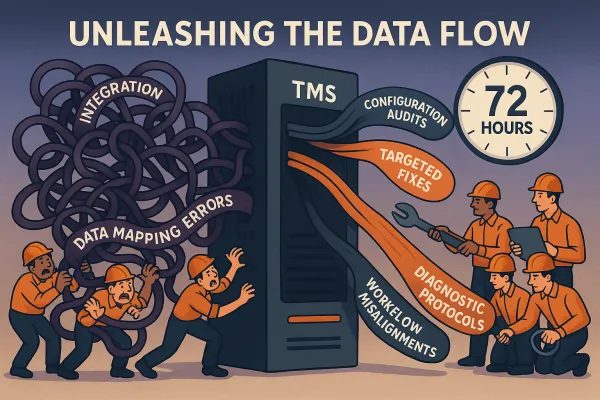
It's unlikely that APIs will fully replace EDI as the standard means for connection in the next several years, but the hybrid reality means your team needs to manage both. Here's the 72-hour framework that prevents integration failures during critical carrier transitions.
Why Speed Matters in TMS API Migration
You get a narrow window when carriers make the switch. Most give you 30-90 days notice, but the actual cutover happens fast. EDI integrations may take several months, whereas, API integrations can take a matter of weeks, if not days. The challenge isn't the API setup - it's maintaining your existing EDI workflows while adding the new connections without data gaps.
A single missing or unreadable EDI message can trigger delays, missed appointments, or rejected shipments. For high-volume transportation environments, like ecommerce fulfillment, even small disruptions can cascade into larger issues downstream.
The 72-hour window assumes you've done your prep work. You need carrier buy-in, API credentials, and parallel testing environments ready before you start the clock. Without that groundwork, you're looking at weeks, not hours.
Hour 0-24: Pre-Migration Setup and Validation
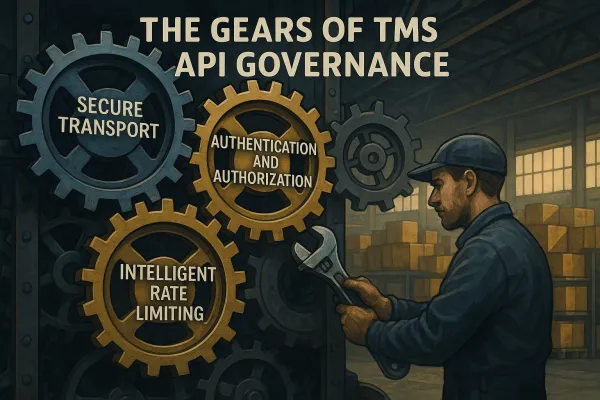
Start with authentication testing. Most API failures happen here. Your team needs valid tokens, correct endpoints, and working SSL certificates. Create a dedicated test environment that mirrors your production EDI volume.
Map your EDI transaction sets to API schemas. EDI 204 load tenders become POST requests to carrier booking endpoints. EDI 214 status updates transform into webhook subscriptions or polling mechanisms. Document every field mapping - you'll need this for troubleshooting later.
Back up your current EDI configurations and transaction logs. Export everything: trading partner setups, map specifications, communication protocols. Store these in version control with timestamps. If you need to rollback, these backups are your lifeline.
Set up your parallel testing with real transaction data. Don't use sample files - use actual EDI messages from the past 30 days. Run API calls for the same shipments and compare responses. Check for data loss, format inconsistencies, and timing differences.
Hour 24-48: Controlled Migration Execution
Prioritize your highest-volume carriers first. They give you immediate feedback on performance issues. Start with a single lane or shipment type to limit blast radius if something breaks.
Monitor API success rates in real-time. Set alerts for response times over 500ms, error rates above 2%, or authentication failures. Your EDI connections typically batch process, but APIs expect immediate responses. Latency issues that wouldn't matter in EDI can break API workflows.
Keep your EDI connections active during the first 48 hours. Run dual feeds until you confirm API reliability. Yes, this creates duplicate processing overhead, but it prevents shipment disruptions. You can reconcile transactions later.
Establish communication protocols with each carrier. They need to know when you're switching, what to watch for, and who to contact for issues. Share test results that prove your API integration matches their expected data formats.
Hour 48-72: Validation and Stabilization
Compare transaction volumes between your old EDI logs and new API calls. Look for missing shipments, duplicate entries, or timing gaps. A TMS orchestrates moves, routing, and rating, but it relies on 214 status messages (whether delivered by EDI or API) for live freight updates. Pushing status straight into your TMS API cuts delay, though many teams keep the EDI 214 stream running as a backup for legacy carriers.
Benchmark performance against your EDI baseline. The application programming interface is capable of performing specific processing tasks much faster than electronic data interchange. APIs should deliver status updates in milliseconds, not the hours typical with EDI batch processing.
Document your new API endpoints, authentication procedures, and error handling workflows. Create runbooks for common issues: rate limiting, timeout handling, webhook failures. Train your operations team on the new monitoring dashboards and alert protocols.
Update your incident response procedures. API failures look different from EDI problems. Instead of file processing errors, you'll see HTTP status codes, JSON parsing issues, and connection timeouts. Your team needs to know how to diagnose these quickly.
Common Migration Failures and Prevention Tactics
Authentication issues top the failure list. API keys expire, OAuth tokens need refresh cycles, and IP whitelisting can block connections. Older EDI connections often rely on protocols like FTP or AS2. If the new TMS doesn't support those methods or supports them differently, message delivery can fail entirely.
Create credential management workflows before you need them. Use secrets management tools, set up automated renewal alerts, and maintain backup authentication methods. Document which team member has access to each carrier's developer portal.
Data format incompatibility catches many teams off guard. EDI uses fixed-width fields and standardized codes. APIs use JSON schemas that vary by carrier. A shipment date that EDI sends as "YYYYMMDD" might need to be "YYYY-MM-DDTHH:MM:SSZ" in the API.
Build validation layers that check data format before transmission. Test edge cases: special characters in addresses, international date formats, multi-piece shipments. Your EDI maps probably handle these scenarios - make sure your API code does too.
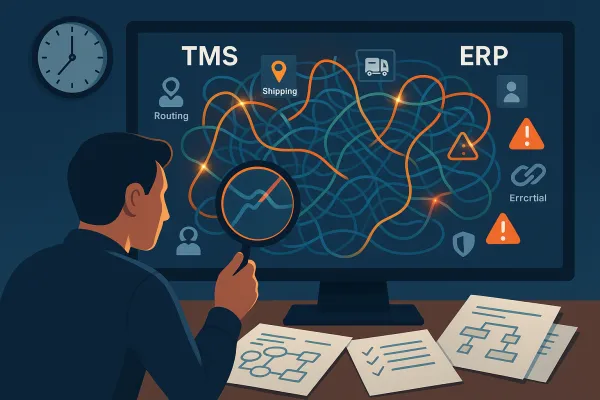
Legacy system integration becomes complex when you're running hybrid EDI/API environments. Your TMS needs to track which carriers use which protocols and route data accordingly. Modern platforms from providers like Alpega, Transporeon, nShift, and Cargoson handle this routing automatically, but older systems may need custom development.
Partner readiness varies significantly. Research by Ovum shows that 53% of enterprises experience limitations with their current B2B integration solutions when onboarding trading partners, with approximately 40% requiring over 30 days to bring a new partner online. Some carriers have robust API documentation and sandbox environments. Others provide basic REST endpoints with minimal support.
Post-Migration Operations: Managing the Hybrid Reality
Your work doesn't end at hour 72. Plenty of shippers use both EDI and API. The simple approach is just to split workloads. Live, decision-driving data travels via API while audit-critical records that make more sense in a document anyway stay on EDI.
Set up monitoring for both integration types. EDI failures show up as missing files or processing errors. API issues appear as HTTP errors, rate limiting, or JSON validation problems. Your dashboards need to track both channels and alert on either type of failure.
Build performance optimization into your daily operations. APIs enable real-time data, but they also create new bottlenecks. Real-time exception handling Webhook "slot cancelled" ➞ TMS auto-re-tender · When a carrier misses a cut-off, the TMS can instantly re-issue the load without a planner's phone call. Automated customer visibility Webhook "departed" ➞ Customer tracking URL · Your customer portal shows actual dock departure, not yesterday's batch ASN time stamp.
Plan for scalability as more carriers transition. Full transformations range from USD 50k for a single‑lane pilot to USD 500k for a global rollout. More accessible projects‑running an API alongside EDI or starting with dock‑scheduling data‑begin in the low five figures and often pay back inside a year through faster gate turns and fewer chargebacks.
The European market reality suggests this hybrid approach will persist. The European market reality suggests a continued coexistence rather than a complete migration. Despite predictions of EDI's demise, EDI is not only here to stay but is set to expand, with the global EDI market projected to value $49.213 billion by 2027.
Your 72-hour migration protocol prevents immediate failures, but long-term success requires ongoing investment in both integration types. Document what worked, what didn't, and what you'd change for the next carrier transition. Because there will be a next one.
The companies thriving in this transition are those that treat integration diversity as a competitive advantage, not a burden to manage. Your migration framework should make adding new carriers faster, whether they prefer EDI, APIs, or something entirely different.