Hybrid EDI-API Workflow Triage: The 4-Hour Operations Protocol That Prevents 80% of Integration Failures When Legacy Partners Meet Modern Systems

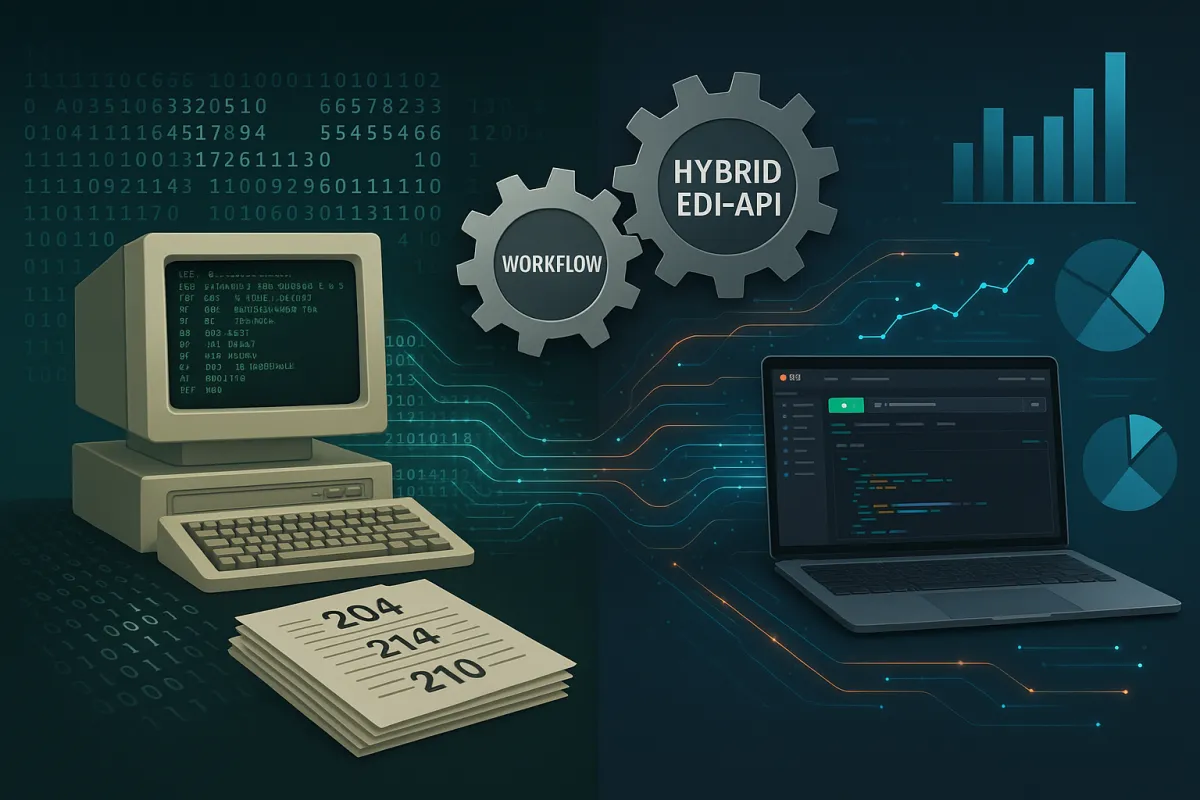
Your TMS team faces a reality check: full EDI retirement only becomes viable when three hurdles clear - Partner Readiness, System Limits, and Compliance Comfort. Until all three align, a compromise is necessary. That means managing hybrid EDI-API workflows where most logistics providers and shippers are now paying a "Hybrid Tax" because of API and EDI integrations.
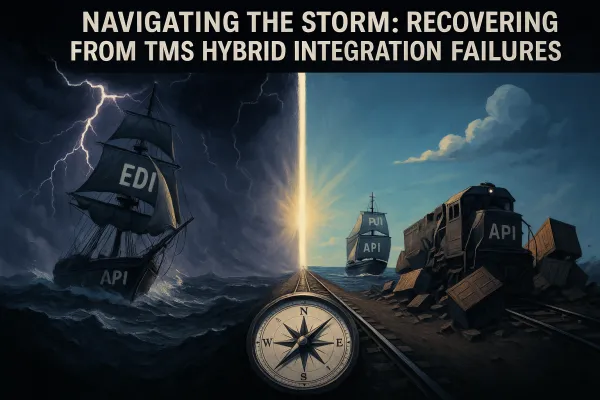
The operations teams dealing with this split know the drill: you need both protocols running simultaneously, which means twice the complexity and double the failure points. But here's the approach that prevents 80% of the integration breakdowns we see when teams try to wing it without a proper protocol.
The Reality Check: Why Your TMS Needs Both EDI and API (Not Either/Or)
Your team probably wants to go full API yesterday. Makes sense. A retailer might receive a purchase order via traditional EDI, then use APIs to instantly update inventory and trigger fulfillment processes in real-time. But the reality hits when you check partner requirements.
Major retailers still demand EDI 850s for purchase orders while expecting real-time API updates for shipment tracking. Live, decision-driving data travels via API while audit-critical records that make more sense in a document anyway stay on EDI. That creates the split you can't avoid.
Platforms like Cargoson, MercuryGate, and Oracle TM handle this dual-protocol challenge differently, but they all recognize the same truth: the market is today toward hybrid EDI and API connectivity rather than EDI alone. The question becomes how to manage both without creating operational chaos.
Here's what triggers the hybrid requirement: companies with 100-200 trading partners and 400-500 transaction maps can't flip a switch overnight. Your biggest partners control the timeline, not your IT roadmap.
Mapping Your Hybrid Architecture: The 6-Point Diagnostic
Before you can fix hybrid workflow failures, you need to understand which transactions flow where and why. This isn't academic mapping - it's operational triage preparation.
Transaction Type Assessment: List every EDI transaction set (204 tenders, 214 statuses, 210 invoices) alongside your API endpoints. Notice the pattern: status-heavy documents (163, 214, appointment notes) to API is optional and partner-by-partner. Inventory-centric documents (943, 856, 945, 846) keep riding EDI until your ERP and trading partners are ready for a broader API leap.
Partner Capability Matrix: Document which of your trading partners can handle APIs versus those locked into EDI-only workflows. Walmart typically requires EDI while Amazon prefers APIs - you'll run both for the same transaction types.
Data Volume and Timing: Track transaction volumes per protocol. EDI handles batch processing well, APIs excel at real-time updates. Understanding the split helps predict where bottlenecks occur.
System Integration Points: Map how your TMS connects to each protocol. Modern platforms now offer pre-built connectors that integrate EDI directly with major ERP systems, including SAP, Oracle, NetSuite, and Microsoft Dynamics. These hybrid connectors enable automated workflows where EDI handles standardized transactions while APIs ensure ERP systems always have the most current data available.
Authentication and Security: Different protocols, different security models. API keys expire, EDI certificates need renewal. Document the credential rotation schedule for both.
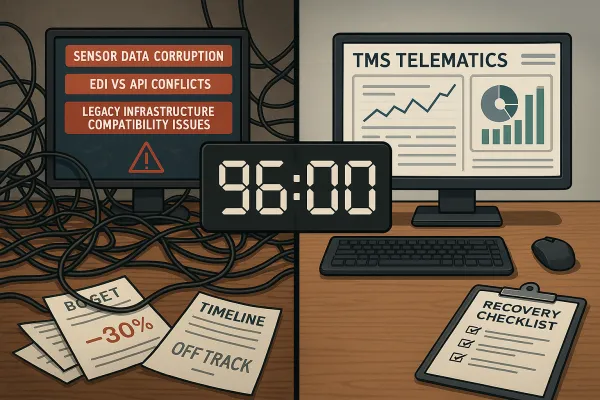
Error Handling Pathways: EDI failures create different error patterns than API failures. Rate limiting versus batch processing delays require different diagnostic approaches.
The 4-Hour Triage Protocol: When Hybrid Workflows Break
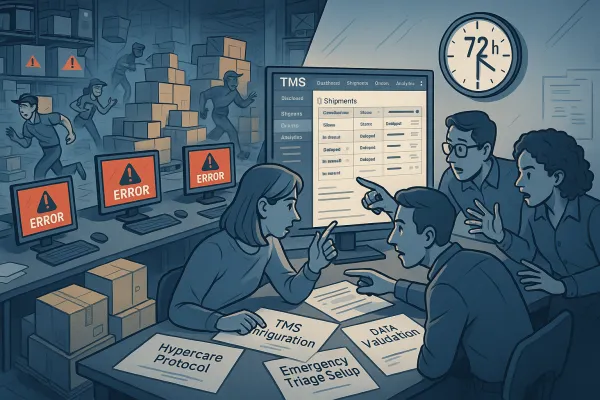
When your hybrid TMS integration breaks at 2 PM on a Tuesday, you need systematic diagnosis, not random troubleshooting. Zenbridge notifies of failure events that can happen across your EDI process. From non-compliant EDI to connection failure - get notified via Email, but notification isn't resolution.
Hour 1: Initial Assessment and Traffic Routing
Start with the big picture. Check both EDI and API channels simultaneously - never assume one protocol is working because the other failed.
Check EDI batch processing status first. Look for hung jobs, timeout errors, or authentication failures. Then verify API response times and error rates. An organization can augment EDI data flows with real-time signals, such as carrier status, so API failures often cascade into EDI workflow problems.
Verify authentication credentials haven't expired. API keys and EDI certificates follow different renewal cycles. Document both expiration dates and implement automated monitoring for 30-day warnings.
Implement circuit breaker logic for failed endpoints. Route traffic to backup connections or alternative partners when possible. Your goal: contain the failure scope within the first hour.
Hour 2-3: Partner-Specific Diagnostics
With 100-200 partners, you need systematic partner diagnosis, not manual checking. Focus on high-volume partners first - they cause the biggest operational impact.
Check for version mismatches between EDI and API implementations. Partners might update their API specifications while maintaining legacy EDI formats. This creates data consistency issues that appear as intermittent failures.
Review transaction-specific routing rules. A partner configured for EDI purchase orders might expect API shipping notifications. Mixed routing creates silent failures that surface during peak processing times.
Test individual partner connections using sample transactions. Complex EDI specifications require comprehensive testing, including normal cases, edge cases, error scenarios, and high-volume stress tests. Many implementations fail due to inadequate testing frameworks. Run tests against both protocols to identify which channel works.
Hour 4: Failover and Recovery Procedures
Build rollback plans without disrupting supply chain operations. Switch partners from failed protocols to working alternatives. If API fails, can you route urgent transactions through EDI? Document the manual override procedures.
Implement partner communication protocols. When failures affect customer-facing transactions, you need approved messaging templates. Explain technical delays without revealing system vulnerabilities.
Establish recovery verification steps. Test both protocols after fixes. Confirm transaction flow end-to-end before declaring the incident resolved. Self-service controls help enterprise teams adjust mappings, workflows, and partner requirements without waiting in long ticket queues. With stronger visibility and governance, teams can manage exceptions systematically.
Monitoring and Alerting: The Dual-Channel Dashboard Setup
You can't manage what you can't see, and hybrid workflows create twice the visibility challenges. Your monitoring needs to track EDI batch processing and real-time API metrics simultaneously.
Configure separate dashboards for each protocol, then create a unified view showing transaction flow across both channels. Monitor EDI processing delays against API response times. Archive EDI messages, acknowledgments and transformations onto analytics platforms for forecasting, chargeback analysis and partner performance scorecards.
Set up alerting thresholds that account for protocol differences. API failures generate immediate alerts, EDI issues might not surface until the next batch cycle. Configure early warning alerts for trending issues: increasing API error rates or EDI queue backlogs.
Track message comparison metrics between protocols. When the same transaction type flows through both EDI and API, compare processing times and error rates. This data helps optimize routing decisions and identify protocol-specific performance issues.
Platforms like SAP TM and Descartes provide built-in monitoring for hybrid scenarios, while solutions like Cargoson offer unified dashboards that show both EDI and API transaction status in single views.
Partner Communication Scripts: Managing Expectations in a Hybrid World
Clear communication prevents most escalations when hybrid workflows encounter issues. Your partners need to understand the technical reality without getting buried in implementation details.
Create timeline communication templates that explain service impacts: "EDI processing delays affecting batch updates, API services remain operational for real-time tracking." Include expected resolution timeframes and alternative access methods.
Develop requirement alignment scripts for partner onboarding. Explain which transaction types use which protocols and why. Early EDI requirement documentation, standardized onboarding workflows, partner portals for self-service reduce confusion during implementation.
Build escalation scripts that explain EDI backup when API fails. "Your real-time tracking is temporarily unavailable, but we're processing your shipment updates through our backup EDI system. You'll receive batch updates every 4 hours until API service restores."
The 90-Day Optimization Cycle: From Reactive to Proactive
Moving beyond firefighting requires systematic improvement cycles. TMS platforms are shifting from static weekly planning to continuous execution and daily performance checks, which means your hybrid monitoring needs to evolve too.
Month 1: Baseline establishment. Document current failure rates for both EDI and API channels. Track mean time to resolution for each protocol type. Identify the top 10 failure patterns and their root causes.
Month 2: Process optimization. Implement automated routing rules based on real-time protocol health. Create self-healing workflows that switch traffic between EDI and API when performance degrades. Protocol agnosticism, where integration providers like Splice seamlessly marry EDI and API together and apply AI as needed. The goals are to reclaim the time to innovate within your IT and development teams by reducing, if not eliminating, time on integrations.
Month 3: Performance measurement. Compare hybrid workflow efficiency against single-protocol baselines. Measure partner satisfaction improvements and internal operational overhead reductions. Use this data to plan next quarter's optimization targets.
Future-Proofing Your Hybrid Setup: When to Make the Full API Leap
Your hybrid architecture shouldn't be permanent, but the timing for full API migration depends on factors beyond your control. By 2030, EDI technology trends are expected to democratize access to enterprise-grade capabilities, allowing businesses of all sizes to participate in sophisticated digital ecosystems.
Track the three migration readiness indicators: partner API adoption rates, internal system capabilities, and compliance framework comfort. When 80% of your transaction volume can flow through APIs without regulatory concerns, start planning the EDI retirement.
Consider unified platforms that handle both protocols transparently. The best option is the platform that goes beyond EDI document exchange to support hybrid integration (EDI + APIs) and orchestration with visibility and governance. Solutions from Cleo, MuleSoft, and Cargoson provide API-first architectures with EDI compatibility.
Plan migration in phases: start with internal systems, then tackle high-volume partners, finally address compliance-sensitive transactions. Prioritize Cloud Migration: Eliminates legacy technical debt; enables modern capabilities (AI, real-time, scalability) Adopt Hybrid Architecture: Combine EDI reliability for regulated high-volume transactions with APIs for real-time flexibility.
The operational reality: hybrid workflows aren't going away soon. Master them now, and you'll have the foundation for whatever protocol evolution comes next. Your 4-hour triage protocol becomes the bridge between today's mixed requirements and tomorrow's unified integration platform.