TMS Post Go-Live Stabilization: The 72-Hour Hypercare Protocol That Prevents 75% of Implementation Failures

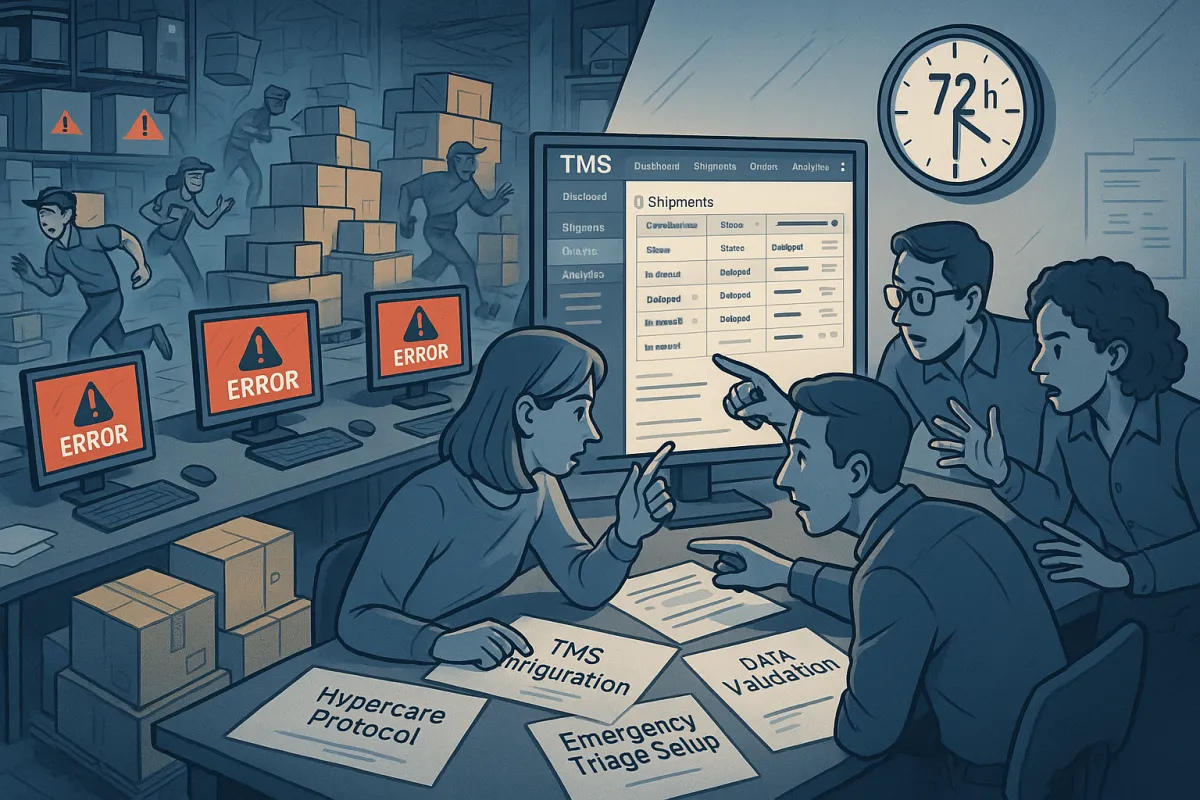
Your TMS just went live. Monday morning arrives, and your shipping team can't generate labels. Carriers are rejecting half the bookings. The warehouse is manually entering data because synchronization failed overnight. Sound familiar?
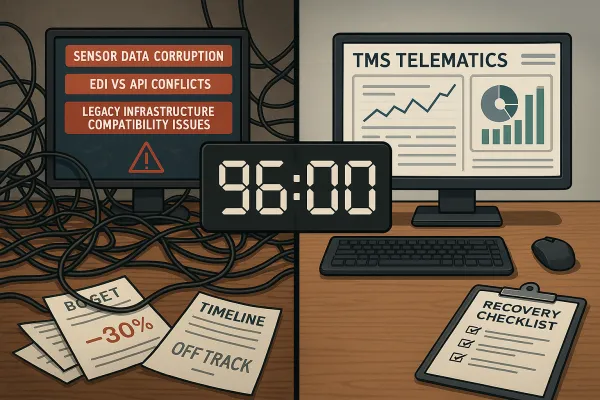
You're not alone. Recent analysis shows 76% of TMS implementations fail to meet budget, timeline, or performance targets, with the first 72 hours after go-live being the most critical period. The difference between success and disaster often comes down to having a structured TMS post go-live stabilization protocol in place before problems escalate.
Why 75% of TMS Go-Lives Turn Into Operational Disasters
The pattern repeats across industries. A German automotive manufacturer I worked with spent €800,000 on their TMS implementation, only to watch carriers struggle with API integrations during the first week. Orders backed up, manual processes returned, and executive confidence evaporated.
Three failure modes dominate the first 72 hours:
Delayed issue resolution. When critical problems surface, teams scramble without clear escalation paths. A 4-hour label generation outage becomes a 12-hour crisis because nobody knows who has authority to make emergency configuration changes.
Data synchronization breakdowns. Historical shipment data doesn't match new system formats. Carrier profiles contain outdated contact information. Rate calculations fail because product weights weren't standardized during migration.
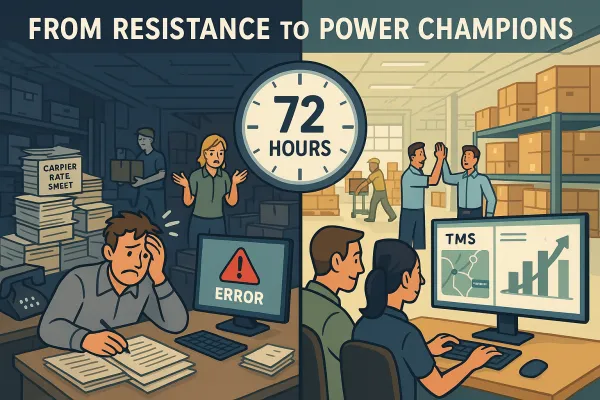
User resistance amplification. Staff trained on system features, not problem-solving scenarios, panic when real-world edge cases appear. Studies indicate 40% of TMS failures stem from inadequate user training that focuses on clicking buttons rather than resolving operational issues.
With the January 2026 eFTI compliance deadline pressuring European shippers to digitize freight documentation, the stakes for successful TMS stabilization have never been higher.
The 72-Hour Critical Window: What Actually Goes Wrong
Bad data in means bad data out. This simple truth becomes painfully obvious when your new TMS starts processing real orders.
Missing address validation rules cause delivery failures. Incomplete carrier profiles break automated booking workflows. Product master data inconsistencies trigger rating engine errors. Each data quality issue creates downstream operational problems that compound throughout the first week.
Meanwhile, sales teams promise impossible delivery windows without consulting the new system's routing logic. Warehouse staff bypass TMS workflows when they encounter unfamiliar screens, creating data gaps that propagate across the entire supply chain.
The training problem runs deeper than most organizations realize. Traditional implementations focus on feature demonstrations rather than scenario-based problem solving. When users encounter their first carrier rejection or customs documentation error, they lack the context to diagnose and resolve issues independently.
Hour 0-24: Emergency Triage Setup
Establish your TMS hypercare protocol before the first issue surfaces. You need dedicated personnel, clear escalation procedures, and vendor contact protocols ready to activate immediately.
Assign dedicated hypercare roles. Designate one technical lead, one business process owner, and one vendor liaison for the first 72 hours. These people don't handle regular duties during this period. Their job is rapid-response support for TMS issues only.
Create issue triage workflows. Define three priority levels: P1 (system down, no workaround), P2 (major feature broken, workaround exists), P3 (minor issues, can wait 24 hours). Each priority level gets different response time commitments and escalation paths.
Prepare vendor escalation matrices. Get direct contact information for vendor technical support, implementation consultants, and account managers. Test these contacts before go-live. Know which issues require immediate vendor involvement versus what your team can resolve internally.
Build a shared communication channel (Slack, Teams, or similar) where all hypercare team members can see real-time updates. Document every issue and resolution in a shared tracking system that captures problem details, steps taken, and final outcomes.
Hour 24-48: Data Validation & Integration Fixes
Clean data problems before they multiply. Focus on the three data categories that cause 80% of early failures: addresses, carrier profiles, and product information.
Run automated consistency checks across all migrated data. Address formats need standardization for automated geocoding. Carrier contact information requires validation against current contracts. Product weights, dimensions, and hazmat classifications need verification against your ERP system.
Validate historical shipment data. Sample 100 recent shipments and verify they process correctly through the new system. Check that tracking numbers generate properly, carrier manifests contain required fields, and billing calculations match expected results.
Test integration touch points. Verify that order feeds from your ERP system trigger appropriate TMS workflows. Confirm that shipment status updates flow back to customer service systems. Check that financial data synchronizes with your accounting platform.
Address data migration gaps systematically. Missing or inconsistent data causes most early TMS operational failures. Better to spend 8 hours cleaning carrier profiles than deal with booking failures throughout the first month.
Hour 48-72: User Adoption Crisis Management
User resistance peaks during this window. Staff encounter edge cases not covered in training. Confidence drops when familiar processes require new steps. Your job is building momentum, not perfection.
Focus on quick wins that demonstrate value immediately. Show warehouse staff how automated label generation reduces manual data entry. Help customer service representatives use shipment tracking to answer calls faster. Give managers visibility into carrier performance metrics they couldn't access before.
Identify power users early. Find the 2-3 people in each department who adapt quickly to the new system. Give them extra support and training, then position them as peer resources for their colleagues.
Document workarounds transparently. When users discover system limitations, create temporary procedures that maintain operational continuity while permanent solutions are developed. Share these workarounds across teams to prevent duplicate problem-solving efforts.
Communicate progress regularly. Send brief daily updates highlighting issues resolved, improvements made, and metrics trending in positive directions. Acknowledge frustrations while maintaining confidence that short-term challenges will resolve.
The Vendor Support Playbook: What To Demand
Your implementation contract should guarantee extended support through the critical stabilization period. Don't accept standard support levels during the first month after go-live.
Demand specific hypercare commitments: 4-hour response times for P1 issues, daily check-ins with your technical team, and on-site or screen-sharing support availability during business hours. Get escalation contacts for evenings and weekends when urgent issues can't wait until Monday.
Major TMS providers like Oracle TM, SAP TM, Blue Yonder, Cargoson, MercuryGate, and Descartes typically offer 30-day hypercare periods, but contract terms vary significantly. Negotiate specific support hours and availability requirements rather than accepting standard SLA language.
Require vendor-provided training for your hypercare team that goes beyond standard user training. Your internal technical leads need system architecture knowledge, database access for troubleshooting, and API documentation for integration debugging.
Metrics That Matter: Measuring Stabilization Success
Track both technical performance and business outcomes during your TMS hypercare protocol. System uptime matters, but operational efficiency improvements matter more.
Monitor API response times, data synchronization rates, and integration error frequencies for technical health indicators. Track these metrics hourly during the first 72 hours, then shift to daily monitoring for the following month.
Measure business impact directly. Count manual data entry hours before and after go-live. Track time required for carrier onboarding processes. Measure customer inquiry resolution speeds when representatives have shipment visibility.
Successful TMS implementations typically show 15-25% improvements in transport administrative efficiency within the first month. Document baseline performance metrics before go-live to validate these improvements objectively.
Create simple dashboards that show daily progress toward stabilization goals. Include metrics like successful shipments processed, integration errors resolved, and user adoption rates by department. Share these dashboards with executive stakeholders to maintain implementation momentum.
Your 72-hour hypercare protocol determines whether your TMS implementation becomes a success story or joins the 75% that struggle to meet their objectives. Invest the preparation time upfront. Your operations team will thank you when Monday morning arrives and everything actually works.